
How to Know When a Home Is Priced Right
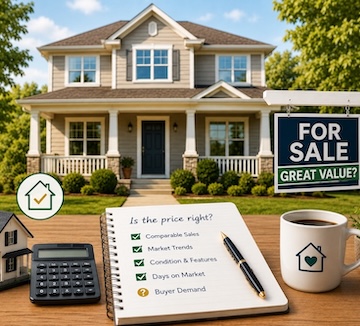 Pricing is one of the most important parts of buying or selling a home. For sellers, the right price can help attract serious buyers, generate strong interest, and reduce time on the market. For buyers, knowing whether a home is priced fairly can help you make a confident offer and avoid overpaying.
But how do you know when a home is truly priced right? It comes down to more than just the number on the listing. A well-priced home reflects current market conditions, comparable sales, property condition, location, and buyer demand.
It Compares Well to Similar Homes
One of the best ways to determine if a home is priced right is to compare it with similar homes that have recently sold in the area. These are often called “comps,” or comparable sales.
A good comparison looks at homes with similar features, such as:
- Location and neighborhood
- Square footage
- Lot size
- Number of bedrooms and bathrooms
- Age and condition of the home
- Upgrades or renovations
- Garage, pool, outdoor space, or other features
If a home is priced close to similar properties that recently sold, it may be aligned with the market. If it is priced much higher without clear reasons, such as major renovations or a better location, it may be overpriced.
It Reflects the Current Market
Real estate markets can shift quickly. A price that made sense several months ago may not be the right price today.
In a seller’s market, where demand is high and inventory is low, homes may sell quickly and sometimes above asking price. In a buyer’s market, where there are more homes available and fewer active buyers, pricing needs to be more competitive.
A home is usually priced right when it reflects what is happening in the market now, not what sellers hope the market will do.
It Gets Buyer Interest Early
The first few weeks on the market are often the most important. A newly listed home usually gets the most attention when it first becomes available. If the price is right, it should generate showings, inquiries, and possibly offers within a reasonable amount of time.
If a home receives little activity, few showings, or no serious interest, the price may be too high. Buyers are usually comparing several homes at once, and they tend to notice quickly when a property feels overpriced.
It Matches the Condition of the Home
Two homes in the same neighborhood can have very different values depending on condition. A move-in-ready home with updated finishes, modern systems, and strong curb appeal may justify a higher price. A home that needs repairs, cosmetic updates, or major improvements may need to be priced lower.
Buyers often consider not only the purchase price but also the cost of work needed after closing. If a home needs significant updates, the price should reflect that.
It Makes Sense for the Location
Location plays a major role in home value. Homes near schools, shopping, transportation, parks, and desirable amenities may command stronger prices. Properties on quieter streets, with better views, or in high-demand neighborhoods can also be worth more.
On the other hand, homes near busy roads, commercial areas, or less desirable surroundings may need to be priced more competitively. A home is priced right when the location has been factored into the value realistically.
It Does Not Rely on Emotion
For sellers, it is natural to feel attached to a home. Memories, upgrades, and personal investment can make it difficult to look at the property objectively. However, buyers are focused on market value, not sentimental value.
A home is priced right when the price is based on data, not emotion. The best pricing strategy looks at what buyers are actually paying for similar homes, not just what the seller wants to receive.
It Leaves Room for a Strong Negotiation
A well-priced home does not always mean pricing low. It means pricing strategically. The right price should attract qualified buyers while still supporting the seller’s goals.
If a home is priced too high, it may sit on the market and eventually require reductions. If it is priced too low, the seller may leave money on the table. The goal is to find a price that creates interest, supports the home’s value, and allows room for a productive negotiation.
It Is Supported by a Real Estate Professional
Online estimates can be helpful, but they do not always tell the full story. Automated tools may not account for renovations, condition, layout, views, neighborhood trends, or recent changes in buyer demand.
A real estate professional can provide a more complete pricing analysis using local market knowledge, recent sales, active listings, and buyer behavior. This guidance can help both buyers and sellers understand whether a home is priced fairly.
Final Thoughts
A home is priced right when it aligns with the market, compares well to similar properties, reflects its condition and location, and attracts serious buyer interest. Whether you are buying or selling, the right price can make the process smoother, more competitive, and more successful.
For sellers, strategic pricing can help your home stand out and avoid unnecessary time on the market. For buyers, understanding value can help you make a stronger, more informed offer. In any market, knowing the difference between asking price and true market value is key.
Compliments of Virtual Results
SHARE OR SUBSCRIBE TO THIS POST
Recommended For You

About the Author

The Bergamini Group
The Bergamini Group is a dedicated team of agents and staff with one thing in mind “YOU”. We believe in serving our clients by doing the job they hire us to do and doing it right. You can trust our experienced team of sales associates to represent you professionally and expertly throughout all phases of the home buying and selling process. We tell the truth, even though it hurts. We strive to provide the highest level of customer service to our clients with honesty and integrity. You may not like what we have to say, but it will be the truth. Our goal is to find you your dream home.
What Others Are Saying